Independent academic capstone · Go-to-market strategy
One platform story for an AI-first HubSpot.
A comprehensive strategy for turning fragmented product perception into a unified customer-platform position, then carrying that promise through research, integrated communications, measurement, and global expansion.
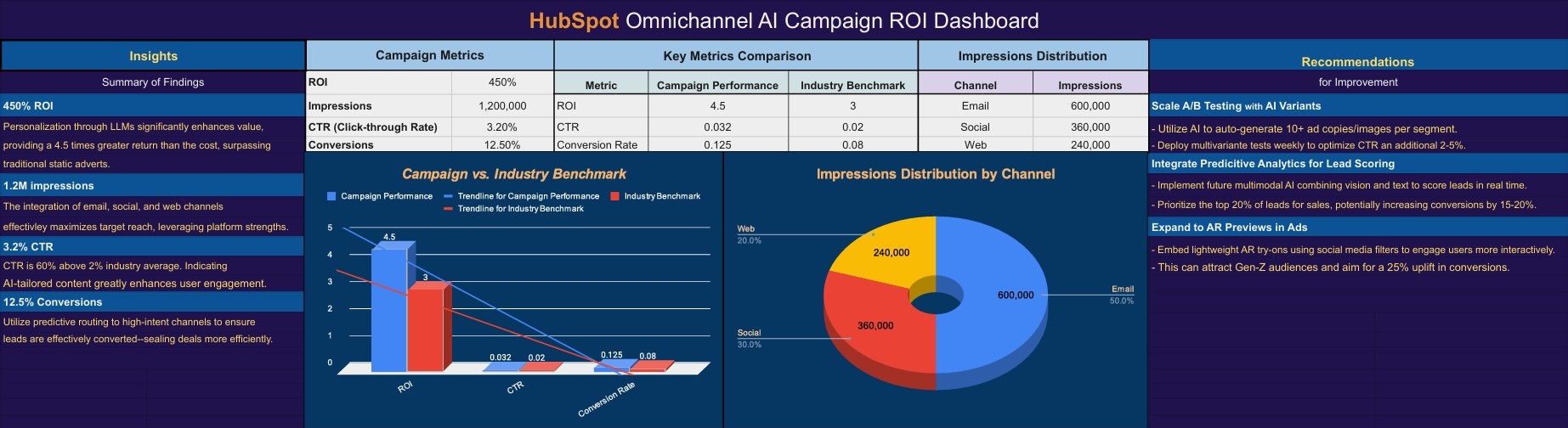
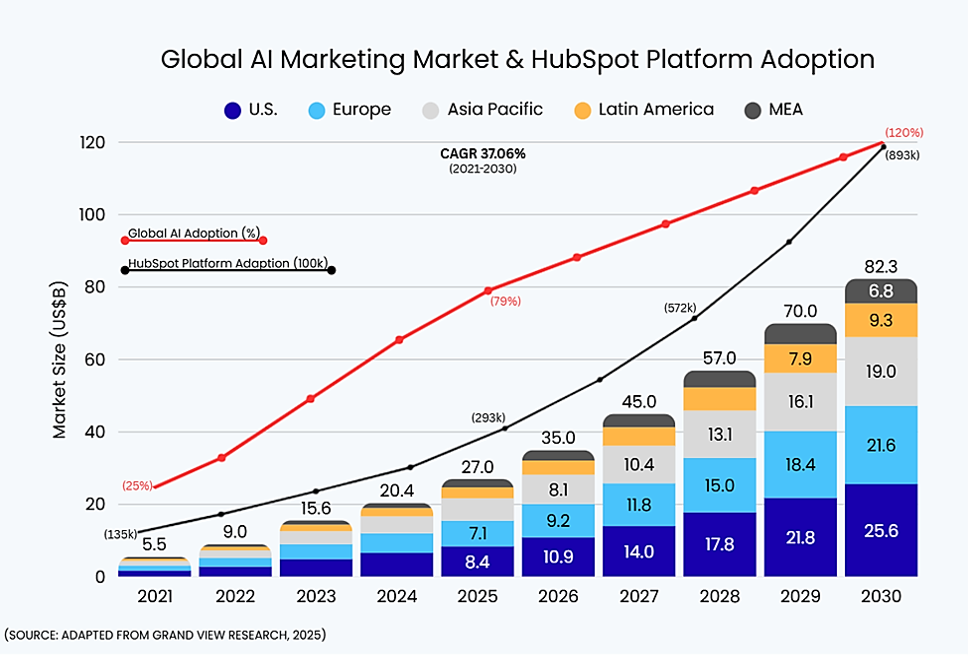
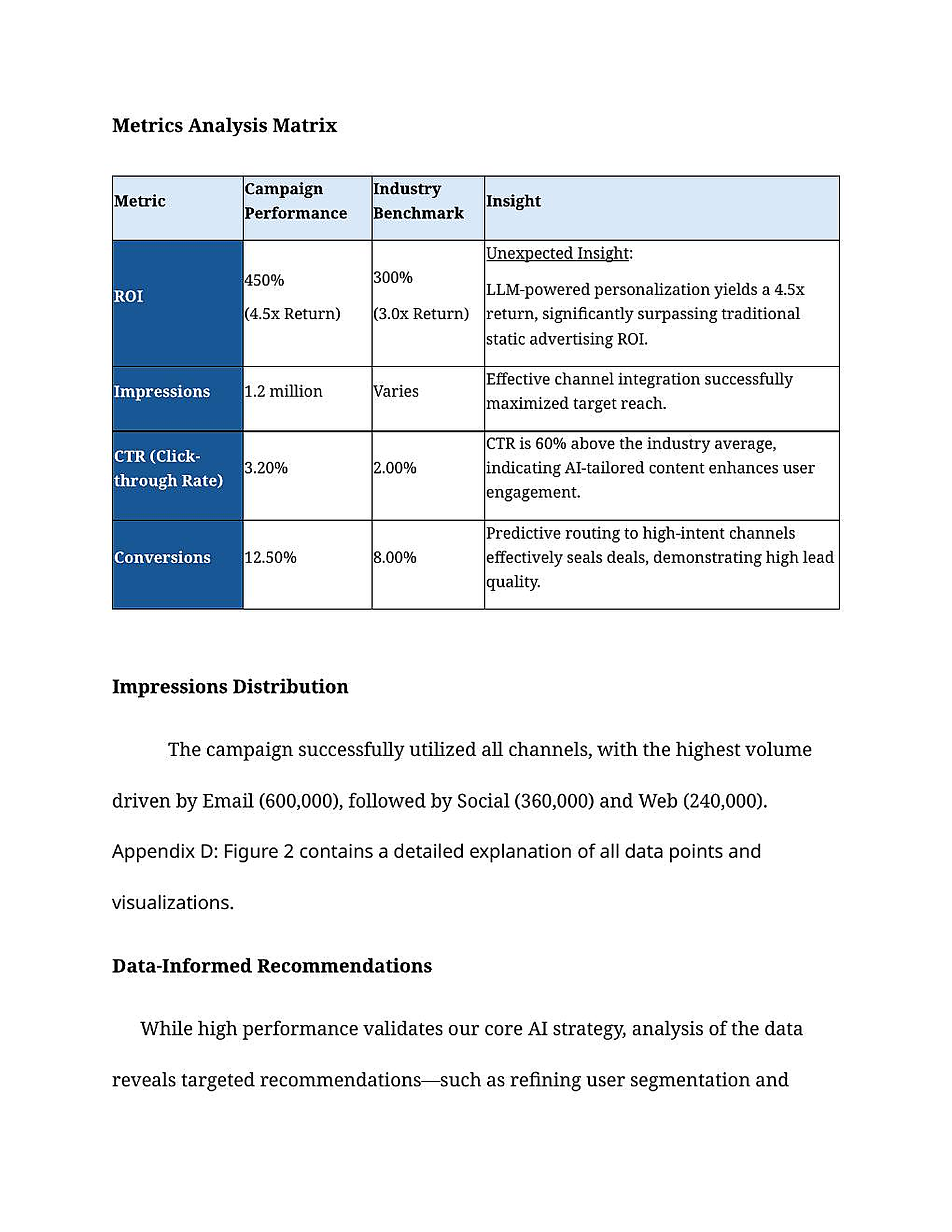
Planning model · These targets and projections demonstrate measurement logic; they are not reported campaign results.
The capstone argument
Integrated intelligence should produce measurable growth.
The strategy begins with the commercial outcome, then works backward to the audience, channel mix, measurement system, and AI-enabled optimizations required to pursue it.
The problem
A strong product story, split across too many hubs.
Growing businesses with 50–250 employees were framed as the priority audience: leaders losing time and insight across disconnected sales, marketing, and service tools.
The strategic response was not another feature campaign. It was a clearer category promise: one AI-enabled platform that breaks down data silos and makes coordinated growth easier to understand.
The method
Research first. One message across the journey.
- 01 · Diagnose SWOT and competitive analysis isolated data fragmentation, AI monetization, enterprise expansion, and localization as the central strategic questions.
- 02 · Position “Spread Too Thin?” translated platform complexity into a customer problem and a single integrated promise.
- 03 · Orchestrate Content, SEO, paid social, search, email nurturing, and partner enablement were assigned clear jobs across the funnel.
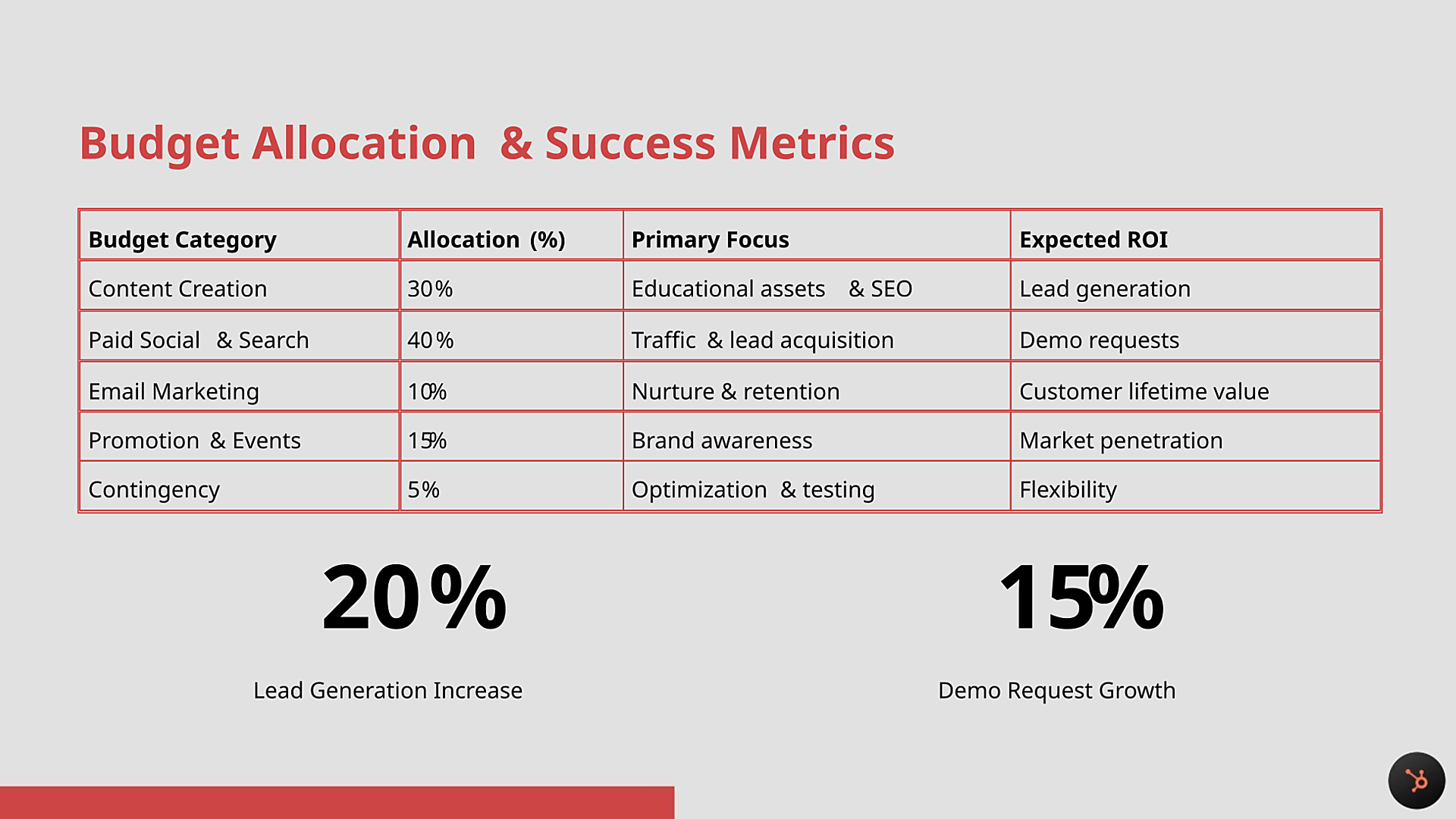
- 04 · Measure The plan tied channel investment to qualified leads, demos, retention, revenue attribution, and an explicitly modeled performance scenario.
What carried forward
From unifying customer data to unifying community events.
The same systems principle appears in Fellowships: diagnose a fragmented information journey, establish one useful source, automate the quiet maintenance work, and make discovery feel human at the surface.