Independent academic strategy · Local growth system
Turning a food-truck launch into a measurable growth engine.
A connected acquisition, attribution, and loyalty plan built around one practical customer problem: busy local diners want authentic food without the wait or uncertainty.
The insight
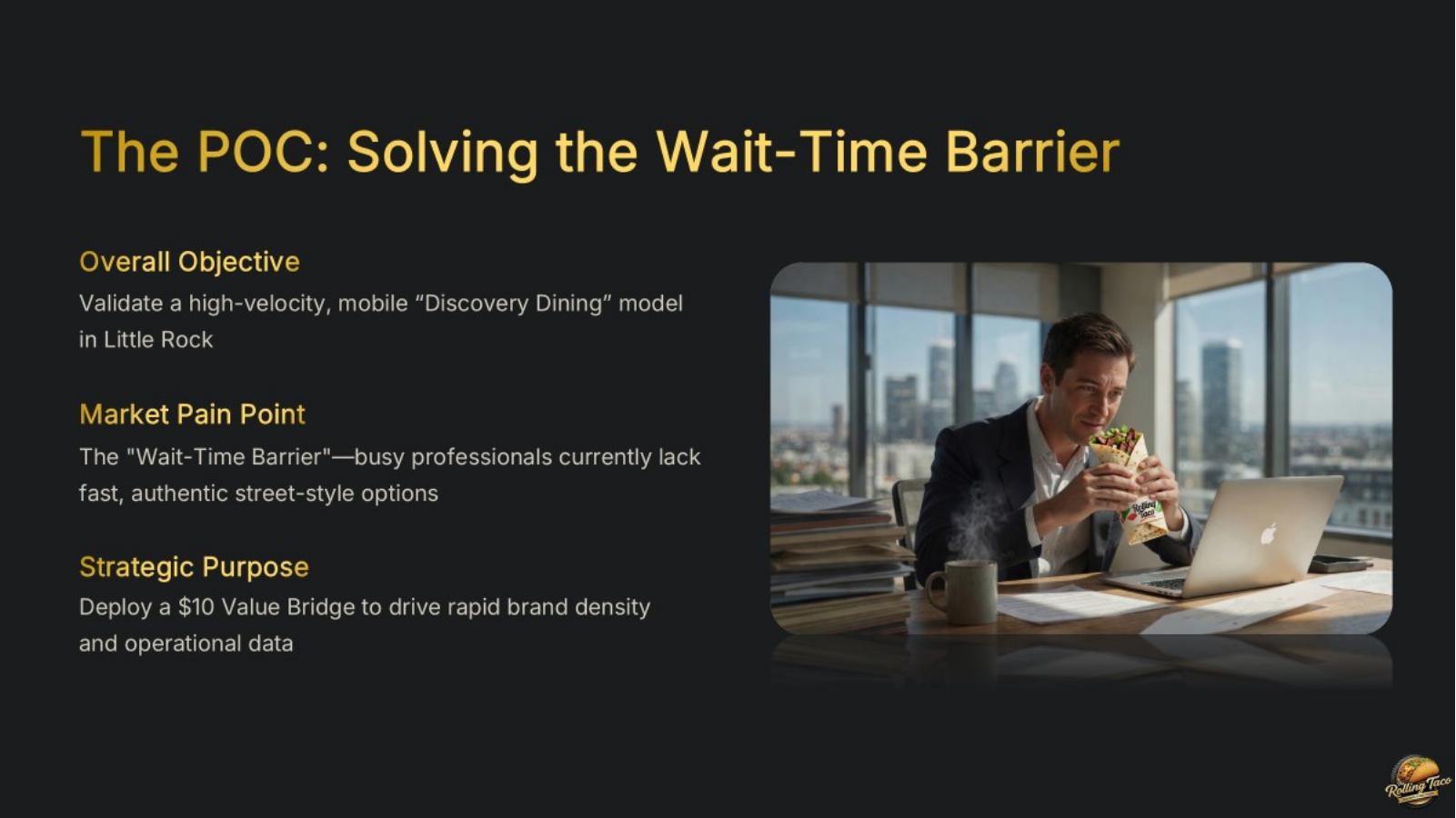
Mobility is only useful when customers know where, when, and why to show up.
The plan defined a “Discovery Diner” segment of convenience-driven, digitally native adults ages 18–44, then matched location cadence to behavior: downtown office hubs during the week and the River Market on weekends.
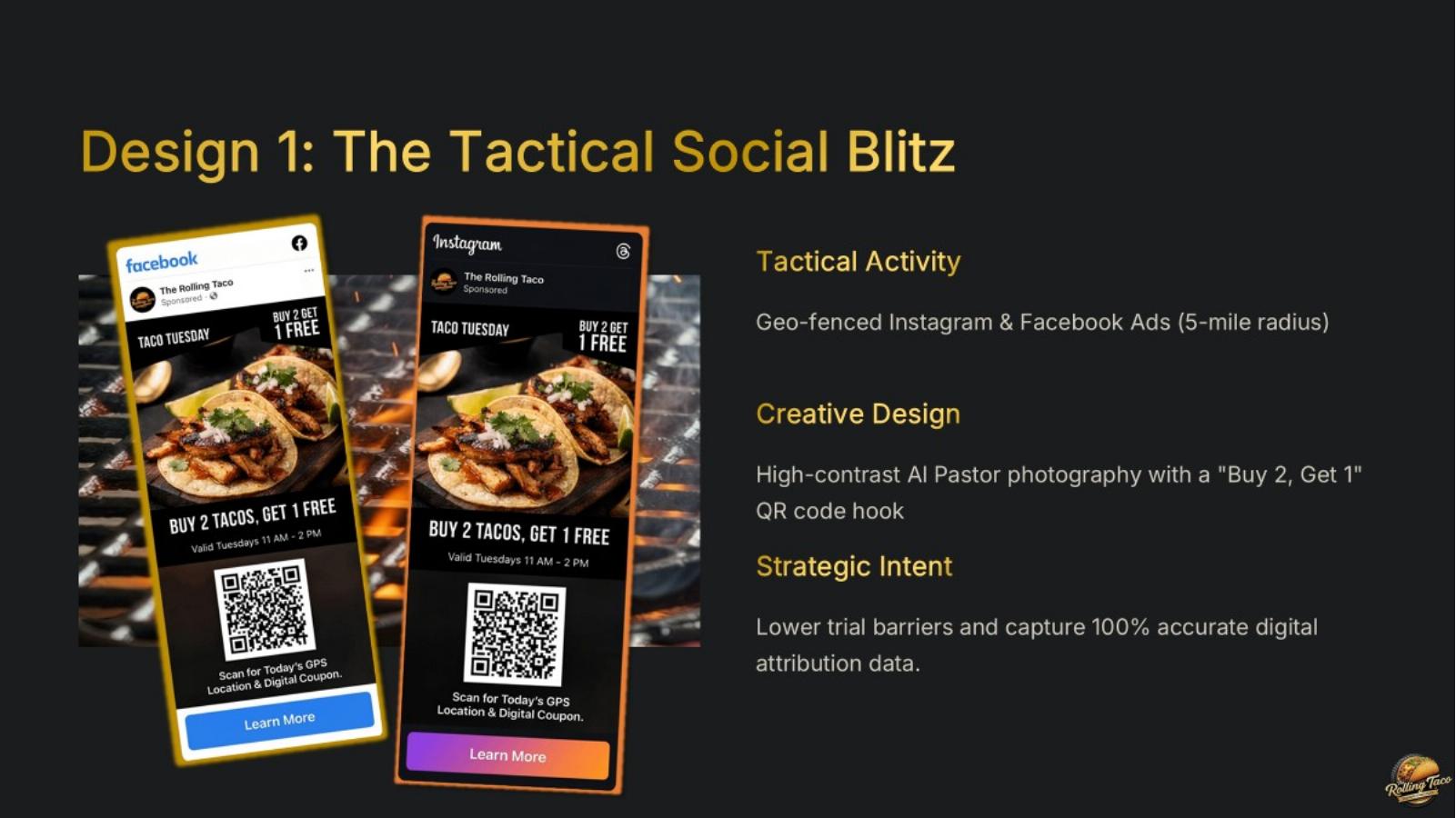
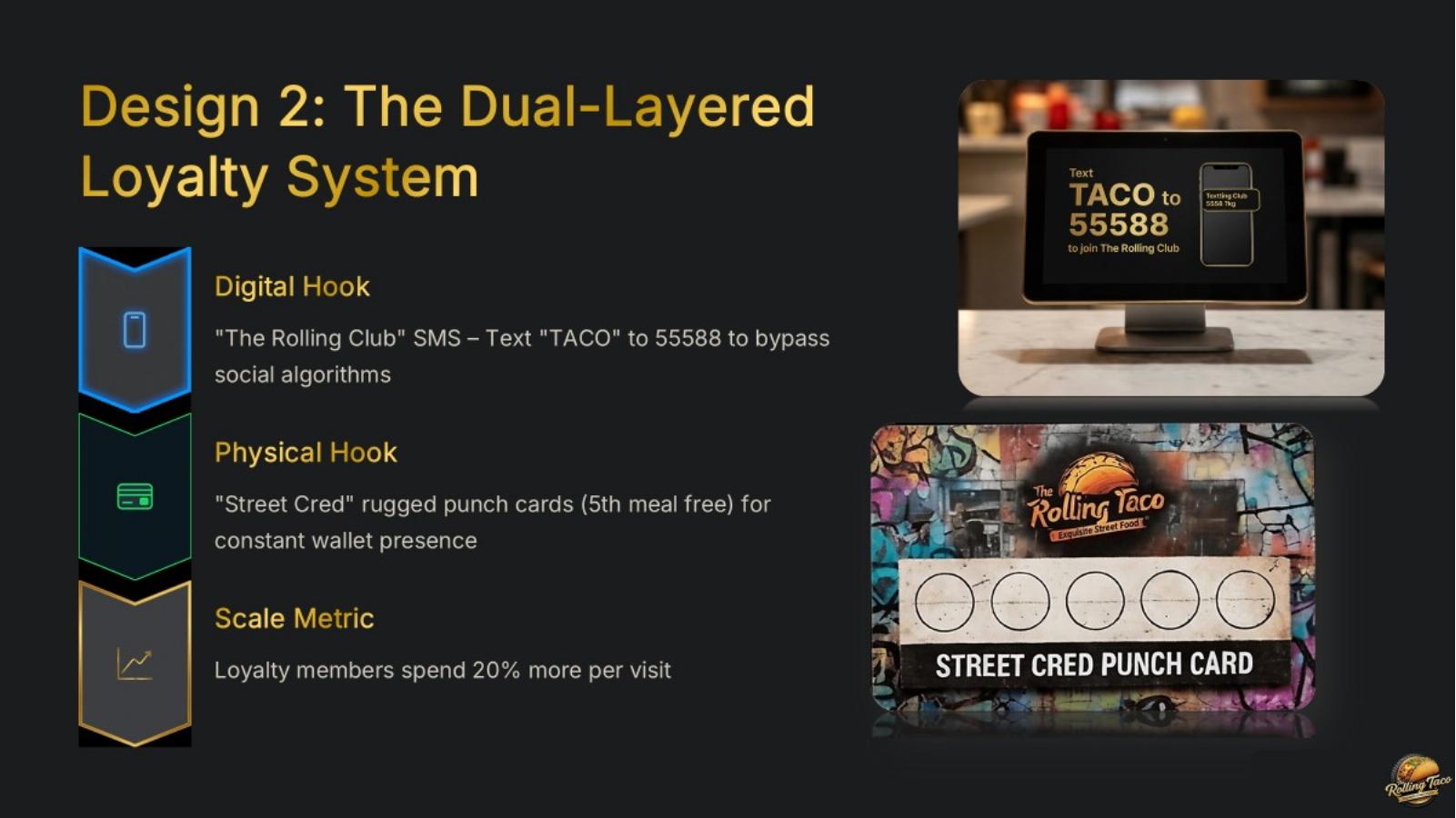
A $10 launch offer lowered the trial barrier. Predictable rotations, geo-fenced media, QR redemption, SMS membership, and a physical loyalty card were designed as one system rather than isolated promotions.
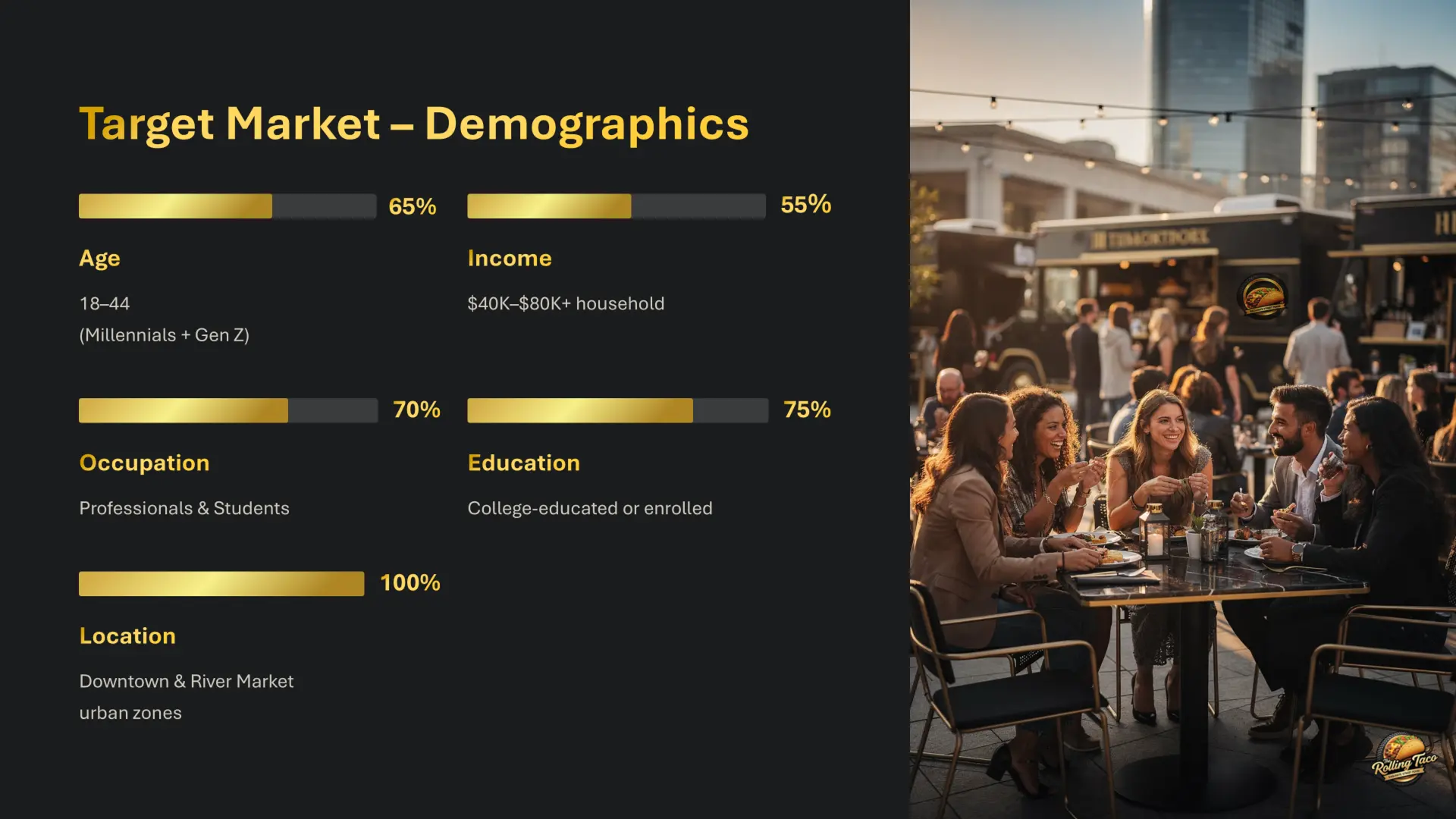
Planned targets
These are strategy targets from the coursework, not reported operating results.
Phased rollout
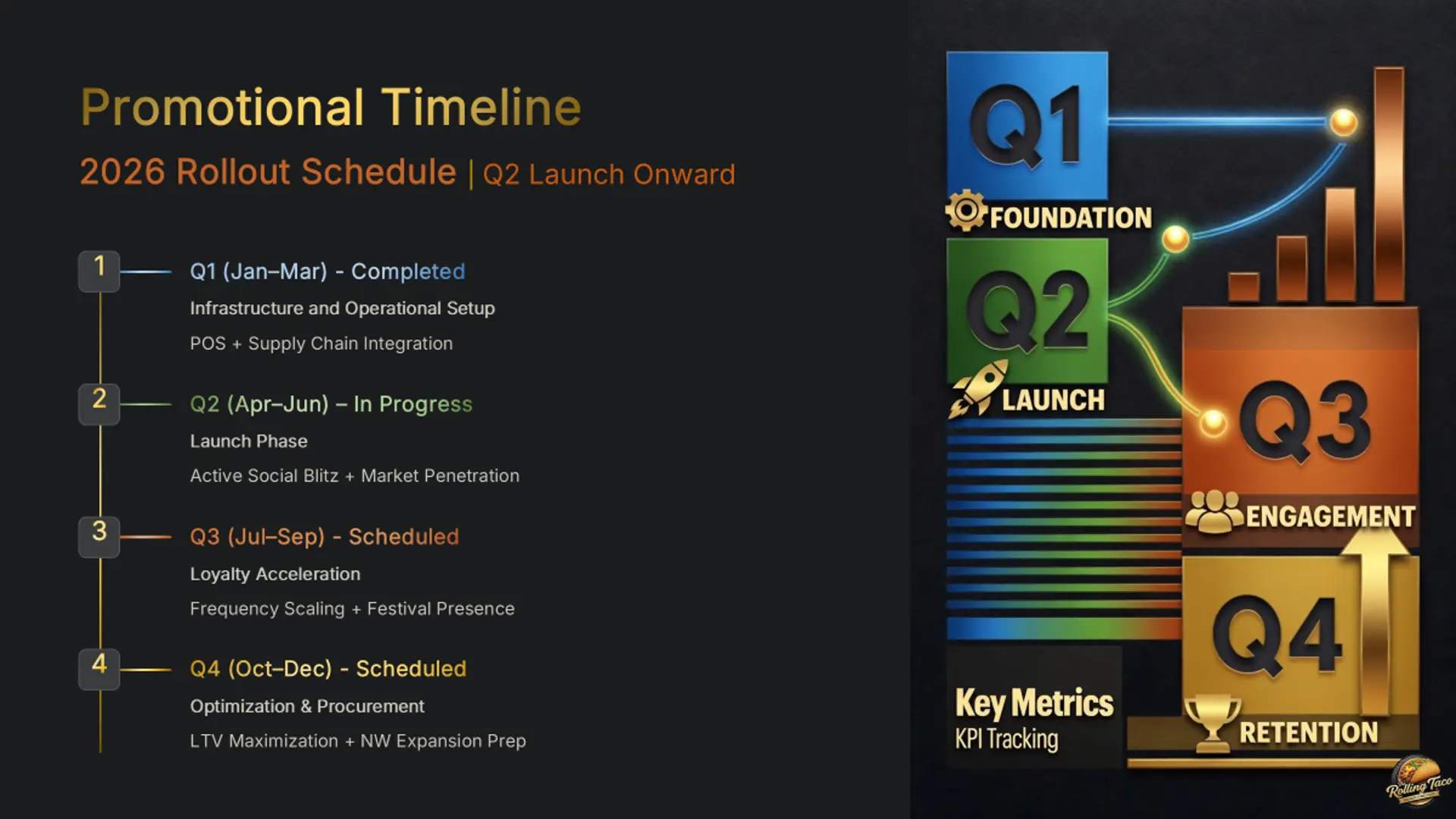
Build the foundation, launch locally, then scale what earns repeat behavior.
The roadmap sequenced operational setup before acquisition, then moved from launch activity into loyalty, optimization, and regional preparation. That order keeps promotion tied to service readiness and measurable customer behavior.
The operating model
A campaign designed to learn, not just launch.
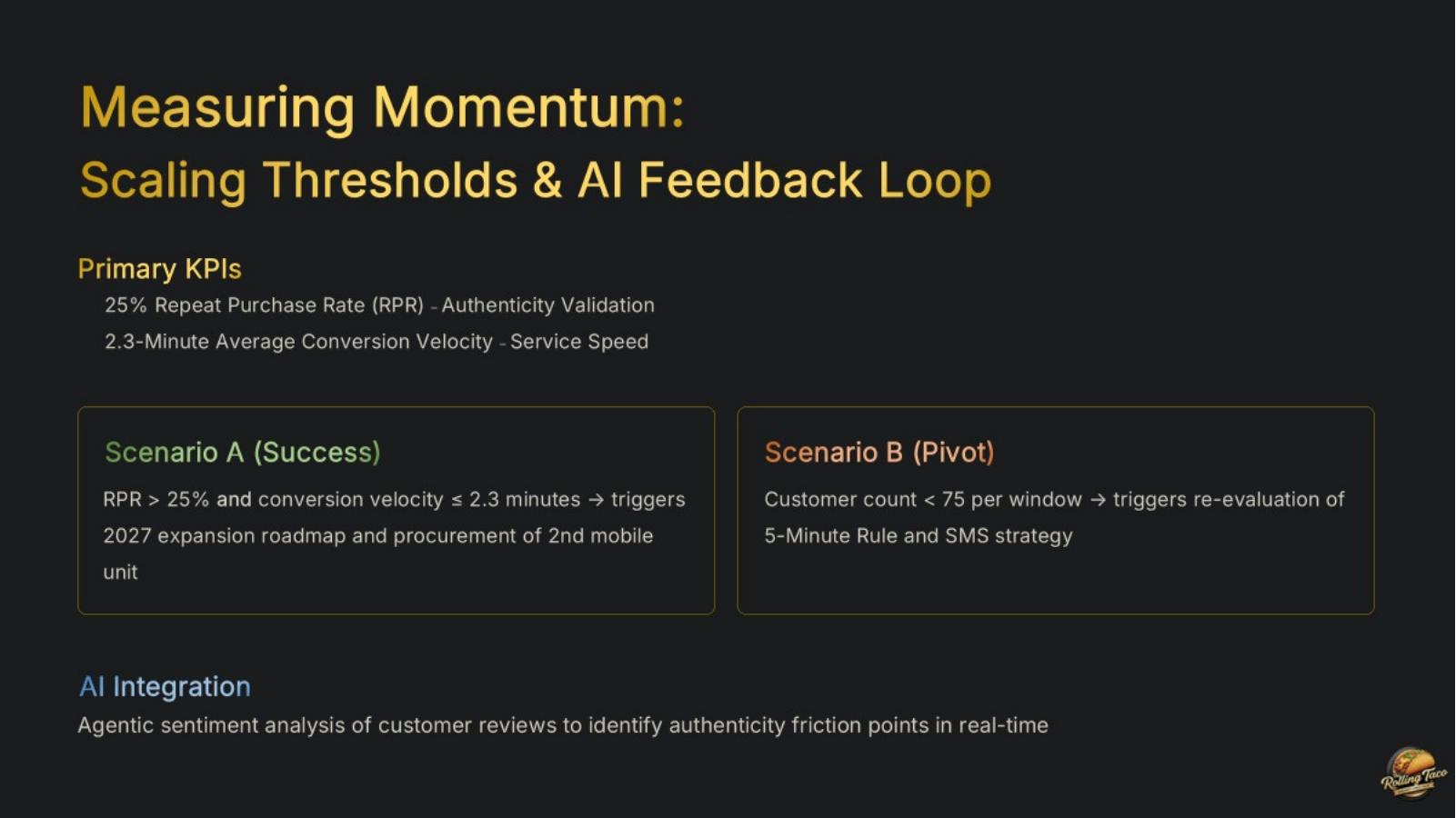
Service velocity, schedule consistency, and coupon scanning formed the measurement spine. Success could trigger expansion; weak customer counts would trigger a review of speed, offer, and SMS strategy.
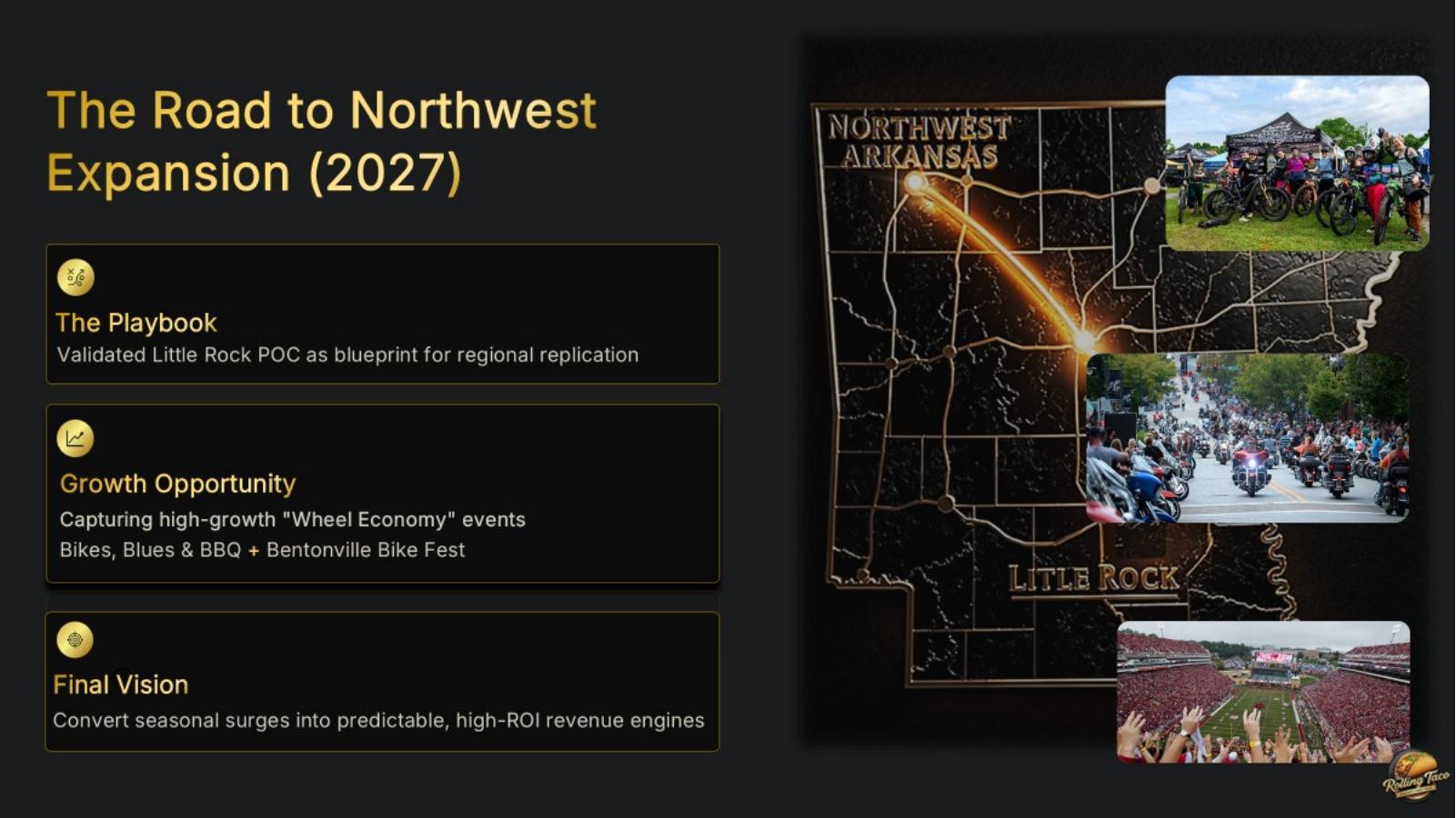
The Northwest Arkansas roadmap treated the Little Rock launch as a proof of concept, with seasonal event demand becoming a repeatable market-entry signal.
Connection to the live work
The coursework built the habit of joining place, timing, discovery, and measurement.
Fellowships applies that habit to a different community need: gatherings scattered across separate websites and feeds become one location-aware, continuously maintained calendar.